iPhone Screen Assembly Wholesale: Why Part Pairing Is Changing How Repair Shops Must Source Screens in 2026
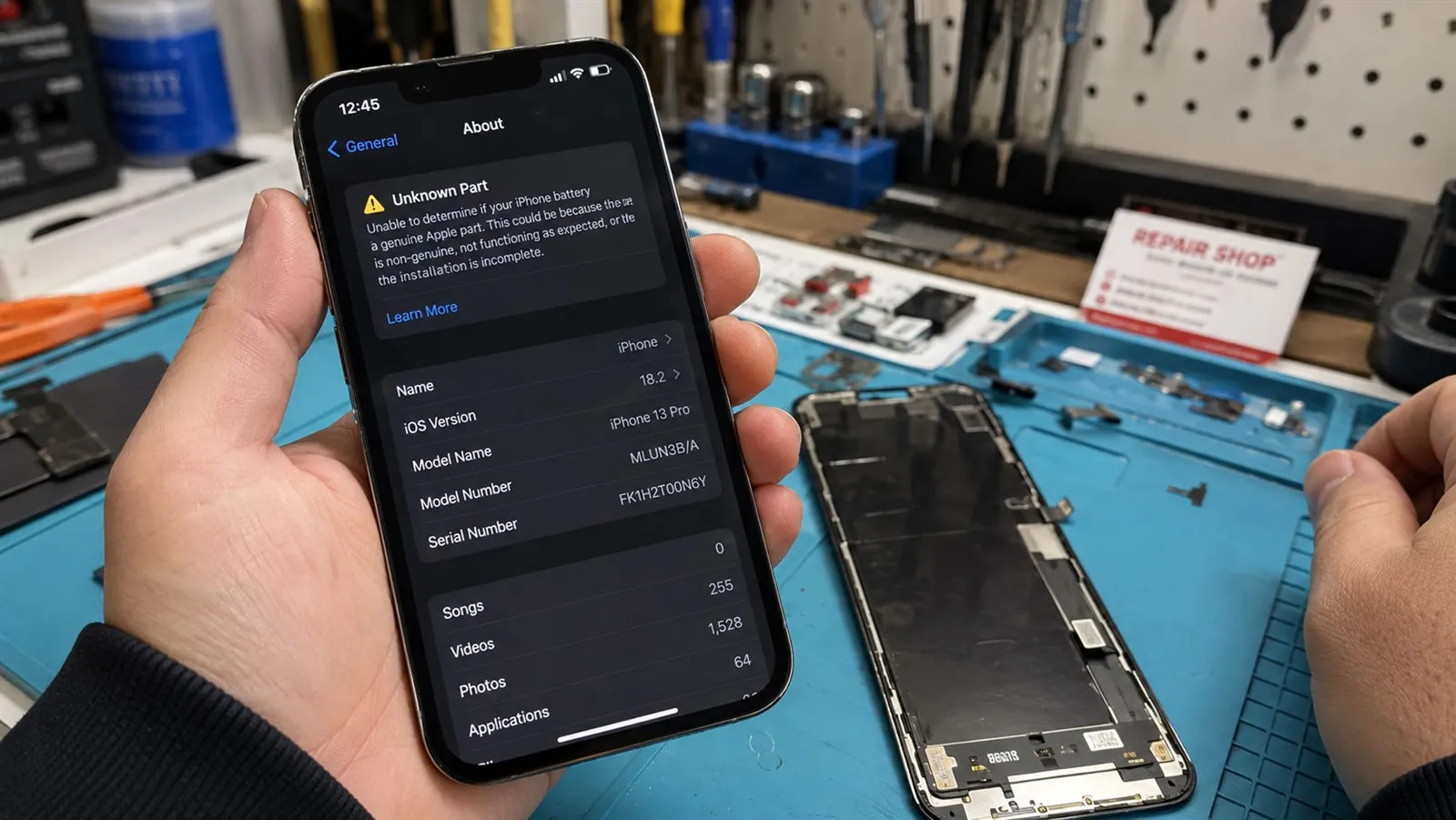
About eight months ago, a distributor we'd worked with for years called in clearly frustrated. His clients - repair shops across the UK - were suddenly reporting something new: customers picking up their phones after a screen replacement and seeing an "Unknown Part" warning under Settings, along with a notification that True Tone and brightness control weren't working correctly. The screens themselves were fine. Touch worked, display worked, no visible defects. But the phone was telling the owner something was wrong.
That distributor's question was the same one we've now answered for dozens of clients since: "What changed? We've been buying the same grade of screen for years."
What changed wasn't the screen. What changed was Apple's software.
This is the conversation every iPhone screen assembly wholesale buyer needs to understand right now, because it directly affects which screens you should be sourcing, how you should be communicating with your repair shop clients, and what "quality" even means for current-generation iPhone models. This article explains what's happening, why it matters more with every new iPhone generation, and what it means for your sourcing strategy through 2026 and beyond.
Part 1: What "Part Pairing" Actually Is - Explained Without the Marketing Spin?
Apple has, for several years, been progressively linking specific hardware components to the logic board of an individual device through a process commonly called part pairing or component serialization. Apple's "Software Lock" requires official calibration - if you use a non-genuine part without a programmer, you may see an "Unknown Part" warning in Settings.
In practical terms: every iPhone display assembly - whether genuine Apple, OEM-grade aftermarket, or original refurbished - has component identifiers that the phone's software checks against records tied to that specific device. When a screen is installed that the phone doesn't recognize as paired to it, certain functions are restricted or flagged, even if the screen itself is functioning perfectly at a hardware level.
The features most commonly affected:
True Tone - the ambient color temperature adjustment feature. On a phone with an unpaired display, True Tone may be greyed out in Settings entirely, or may not function even if the toggle is present.
Automatic brightness control - some configurations show reduced or inconsistent automatic brightness adjustment with an unpaired display.
The "Unknown Part" notification - a banner in Settings > General > About, visible to the device owner, stating that a non-genuine part has been detected. This notification doesn't prevent the phone from functioning, but it's visible to the customer - and customers notice it.
This isn't a new concept entirely - Apple has restricted certain functions on aftermarket parts since the iPhone X era for components like batteries and Face ID modules. Newer Pro and Pro Max models use display assemblies that cost 3–4x more at the component level than an iPhone 11 LCD, reflecting both the manufacturing complexity and the integration depth of these components. What's changed in 2025–2026 is the breadth of what's affected and how visible the notifications have become to end users.
Part 2: Why This Matters More for Every New iPhone Generation?
The trend line here is unambiguous, and it has direct implications for how you should be thinking about your inventory mix going forward.
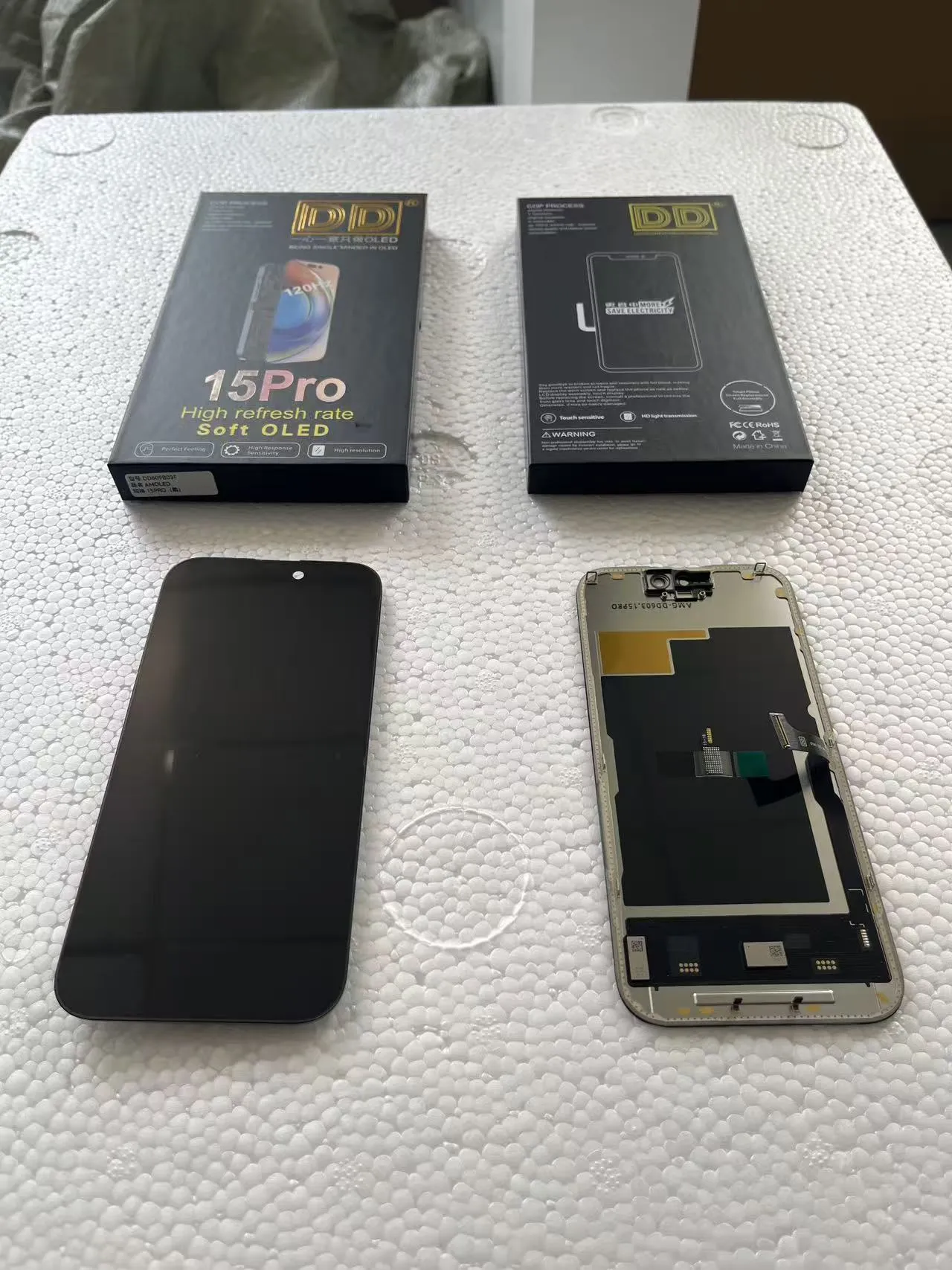
For Pro models with ProMotion (120Hz refresh rate), third-party screens may occasionally lack the same fluid refresh rate unless high-end components are used. The Micro-Lens Array (MLA) technology used in current Pro models significantly boosts brightness but requires precise manufacturing, driving up the cost of replacement panels.
What this means practically: on iPhone 14 Pro and newer Pro models, a screen that doesn't meet a certain component specification doesn't just risk a software notification - it may also fail to deliver the 120Hz ProMotion refresh rate the customer is used to, even if the screen otherwise displays correctly. The customer experience degradation is now visible at the hardware-software interaction level, not just in a settings menu most users never check.
Apple's increased integration of the Dynamic Island and Face ID sensors has made the Display Assembly more complex than ever, and since iPhones from the X series onward use fully laminated OLED structures where the glass, touch layer, and display layer are highly integrated, Apple does not offer separate glass replacement - only a full screen assembly replacement is possible.
For wholesale buyers, this confirms something that's been true in practice for years but is now structurally permanent: glass-only repair is not a viable product category for any iPhone X or newer. Every order you place for these models needs to be a full display assembly - touch layer, OLED panel, and glass laminated together as a single unit. There is no aftermarket "just the glass" option that makes sense once you account for the lamination structure.
Part 3: What This Means for Your Grade Strategy - Updated for 2026
This is where the part pairing issue translates into a concrete sourcing decision, and it's a meaningful update to the grade framework we've discussed in previous guides.
For iPhone 11 and Earlier (Incell LCD Models)
Part pairing effects on these older models are minimal in practice. Incell LCD remains a straightforward sourcing decision - these displays predate the most aggressive component serialization, and aftermarket Incell screens function without triggering significant software restrictions on most units of these models.
For iPhone 12 Through iPhone 14 (Hard OLED / Soft OLED)
This is the range where the part pairing situation is most relevant for current sourcing decisions, because it's the range where customers are most likely to notice - and complain about - the "Unknown Part" notification and True Tone restrictions.
Here's the practical reality: the "Unknown Part" notification appears on virtually all aftermarket screens for these models, including high-quality Soft OLED, because the notification is tied to Apple's serialization check rather than to the screen's actual quality. A repair shop installing a $46 Soft OLED screen and a repair shop installing a $26 Hard OLED screen will both likely see the same "Unknown Part" notification appear on the customer's device.
What differs between grades is whether True Tone and brightness functions can be restored through aftermarket calibration tools, and how the screen performs on every other dimension - color accuracy, defect rate, durability - regardless of the notification.
The sourcing implication:
for this model range, grade selection should be driven by display quality and reliability (as covered in our grade comparison guides), not by an expectation that a higher grade eliminates the "Unknown Part" notification. What changes is how you communicate this to your repair shop clients - and how they communicate it to customers.
For iPhone 15 and Newer
Only attempt a DIY repair on 2025/2026 models if you have a True Tone Programmer, or you will lose significant functionality. This statement, aimed at DIY users, reflects a reality that applies to professional repair shops too: for iPhone 15 and newer, restoring full functionality after a screen replacement - including True Tone and proper brightness behavior - increasingly requires a calibration step using a programming tool, performed after installation, regardless of which screen grade was installed.
This is a meaningful operational shift. It means the screen itself is necessary but not sufficient - the repair shop's process needs to include a calibration step that didn't exist as a requirement on older models. For wholesale buyers, this raises a new question worth asking your supplier: do you provide guidance or compatible calibration tool recommendations alongside the screens you supply for iPhone 15 and newer?
Part 4: Original Refurbished - The One Grade Where This Changes Less
This is where Original Refurbished screens occupy a genuinely different position than they did a few years ago.
Because Original Refurbished screens are genuine Apple display assemblies - pulled from donor devices, cleaned, re-glassed, and tested - they carry Apple's original component identifiers. These are genuine Apple display assemblies reclaimed from used or damaged phones, tested, and refurbished with new glass. They preserve features like True Tone color calibration that aftermarket screens typically lose.
In practice, this means Original Refurbished screens are significantly less likely to trigger the "Unknown Part" notification or restrict True Tone - because from the phone's perspective, the component genuinely is an Apple-manufactured part, even if it wasn't originally paired to this specific device.
This doesn't mean Original Refurbished is now "required" for every repair - the cost premium (typically $20–40 over Soft OLED depending on model) doesn't make sense for every customer or every shop's positioning. But it does mean that for the segment of customers who specifically care about avoiding the "Unknown Part" notification - and that segment is growing as awareness of the notification spreads through online forums, YouTube repair channels, and word of mouth - Original Refurbished has become a more meaningful differentiator than it was three years ago.
For wholesale buyers, this is a reason to revisit the Original Refurbished allocation in your stocking strategy, particularly for iPhone 13, 14, and 15 - the models where customers are most likely to be aware of and concerned about this issue, and where supply of Original Refurbished panels is most consistently available.
Part 5: How to Talk to Your Repair Shop Clients About This - A Communication Framework
If you're a distributor, your repair shop clients are going to encounter customer questions about "Unknown Part" warnings whether or not they're prepared for it. The shops that handle this well - setting expectations before the repair, rather than fielding confused complaints after - tend to have fewer comebacks and better reviews on exactly this issue.
Here's the framework we recommend distributors share with their repair shop clients:
Before the repair:
For iPhone 12 and newer, mention proactively that a notification about "genuine Apple parts" may appear in Settings after the repair, and that this is expected with aftermarket parts and doesn't affect the phone's core functionality. Framing this as a known, expected characteristic - rather than letting the customer discover it and wonder if something went wrong - changes the entire tenor of the conversation.
For customers who specifically ask about True Tone:
Be honest that standard aftermarket screens (Hard OLED, Soft OLED) typically don't support True Tone without additional calibration, and offer Original Refurbished as an option for customers who want that feature preserved, at the appropriate price difference.
For iPhone 15 and newer:
If your shop's process includes a calibration step using a programming tool, communicate this as part of your service - it's a differentiator from shops that don't, and it directly addresses the brightness/True Tone concerns that are becoming more visible with each generation.
This isn't about apologizing for aftermarket parts - it's about setting accurate expectations so that a notification the customer was told to expect doesn't become a source of distrust after the fact.
Part 6: The Wholesale Sourcing Checklist - Updated for the Part Pairing Era
Given everything above, here's how the supplier evaluation questions from our previous guides should be extended for 2026.
Ask your supplier: do your screen assemblies for iPhone 12 and newer include the full lamination - touch layer, OLED panel, and glass as a single fused unit?
Given that Apple does not offer separate glass replacement for iPhone X and newer due to the fully laminated OLED structure, any supplier offering a "glass only" option for these models either doesn't understand the actual hardware architecture or is selling a product that won't function as a standalone repair component. This should be an immediate red flag.
Ask: for iPhone 15 and newer, do you provide any guidance on post-installation calibration?
Suppliers who are tracking the part pairing landscape closely will have informed perspectives on this. Suppliers who don't may not be tracking the changes that affect your repair shop clients' customer experience.
Ask: what's your current Original Refurbished availability for iPhone 13, 14, and 15?
Given the growing relevance of Original Refurbished for the True Tone / Unknown Part concern, supply consistency on these specific models matters more than it did when Original Refurbished was purely a premium cosmetic upsell.
Ask: how do you communicate hardware changes that affect repair shop processes?
A supplier who proactively flags developments like the part pairing trend - rather than leaving distributors and repair shops to discover these issues through customer complaints - is a supplier who's thinking about your business outcomes, not just shipping screens.
Part 7: The Five-Year Outlook - Where Part Pairing Is Heading
This trend is not going to reverse, and understanding its trajectory should inform how you're building your supply chain over the coming years.
Trend 1: Component serialization will extend to more parts, not fewer.
The pattern across recent iPhone generations has been progressive expansion of which components are checked against device pairing records - from batteries, to Face ID modules, to displays, and now to display sub-components affecting refresh rate and brightness behavior. Expect this pattern to continue with future generations, likely extending to additional display characteristics and potentially to camera modules in future repair categories.
Trend 2: Original Refurbished becomes strategically more important, not less.
As component serialization affects more functions, the gap between "genuine Apple component, regardless of source" and "aftermarket component manufactured to spec" becomes more consequential from a software functionality standpoint - even when the aftermarket component's hardware quality is excellent. This structurally increases the value proposition of Original Refurbished sourcing for distributors who can maintain consistent supply.
Trend 3: Calibration tooling becomes a standard part of the repair process, not an optional add-on.
A True Tone Programmer is increasingly necessary for repairs on 2025/2026 models to avoid losing significant functionality. Repair shops that build calibration tooling into their standard process for current-generation models will differentiate from those that don't - and as a wholesale supplier, being able to support that conversation (even if you're not selling the tooling itself) builds trust with your distribution clients.
Trend 4: Right-to-Repair legislation may directly address part pairing practices.
The EU's smartphone repairability framework explicitly addresses manufacturer techniques that impede repair. Part pairing practices that restrict functionality based on component origin - rather than component quality - are squarely the kind of practice this legislative framework is designed to address. Over the next several years, regulatory pressure in the EU specifically may change how aggressively manufacturers can restrict functionality based on part pairing, which would meaningfully reshape this entire conversation. Distributors operating in EU markets should watch this space closely - a regulatory shift here would directly benefit the aftermarket supply chain.
Trend 5: Customer awareness continues to rise, making proactive communication a competitive advantage.
As online communities, repair YouTube channels, and right-to-repair advocacy groups continue to publicize the part pairing issue, customer awareness of "Unknown Part" notifications will only increase. Repair shops - and the distributors supplying them - who get ahead of this with clear communication will increasingly differentiate from those whose customers discover the issue and feel misled.
The Bottom Line
The part pairing issue isn't a reason to avoid aftermarket iPhone screen sourcing - the economics of aftermarket repair remain compelling, and the vast majority of customers care more about a functioning, good-looking screen at a reasonable price than about a notification in a settings menu they rarely visit.
But it is a reason to update how you think about grade strategy, how your repair shop clients communicate with customers, and how you evaluate iPhone screen assembly wholesale suppliers going forward. The suppliers worth working with in 2026 are the ones who understand this landscape well enough to help your business navigate it - not just the ones with the lowest per-unit price on a spec sheet that doesn't capture the full picture anymore.
Frequently Asked Questions
Will my customer's iPhone stop working if I install an aftermarket screen?
No. The phone remains fully functional for calls, apps, and most display functions. The "Unknown Part" notification and potential True Tone/brightness restrictions are software-level notices and limitations, not functional failures.
Does a higher screen grade (Soft OLED vs Hard OLED) avoid the "Unknown Part" notification?
Generally no. The notification is tied to Apple's component pairing check, not to the screen's hardware quality. Higher grades improve display quality, color accuracy, and defect rates - but typically don't change whether the notification appears on iPhone 12 and newer.
Is Original Refurbished the only way to avoid the "Unknown Part" notification?
It's the most reliable option in most cases, because these are genuine Apple-manufactured display assemblies. It's not an absolute guarantee depending on the specific donor device and pairing history, but it's significantly more likely to avoid the notification than standard aftermarket grades.
Do I need special tools for iPhone 15 and newer screen replacements?
A growing number of repairs on these models require a post-installation calibration step using a programming tool to restore full True Tone and brightness function. This is a process change for repair shops, not a screen sourcing change - but it's worth confirming your shop's process accounts for it.
Can I still buy "glass only" replacement parts for iPhone X and newer?
Functionally, no - these models use fully laminated display assemblies where the glass, touch layer, and OLED panel are fused as a single unit. Any supplier offering "glass only" for these models is not describing a viable standalone repair component.